


Hybrid autonomy.
Multi-domain.
HRT Industries builds the only autonomy stack that operates seamlessly across air, ground, and hybrid domains, fielded systems for reconnaissance, counter-UAS, and long-endurance operations in contested environments.
HRT exists to put decisive autonomy in the hands of the people who operate in contested space. We design hardware and software as a single weapon system , because the operators we build for do not get to choose between the two.
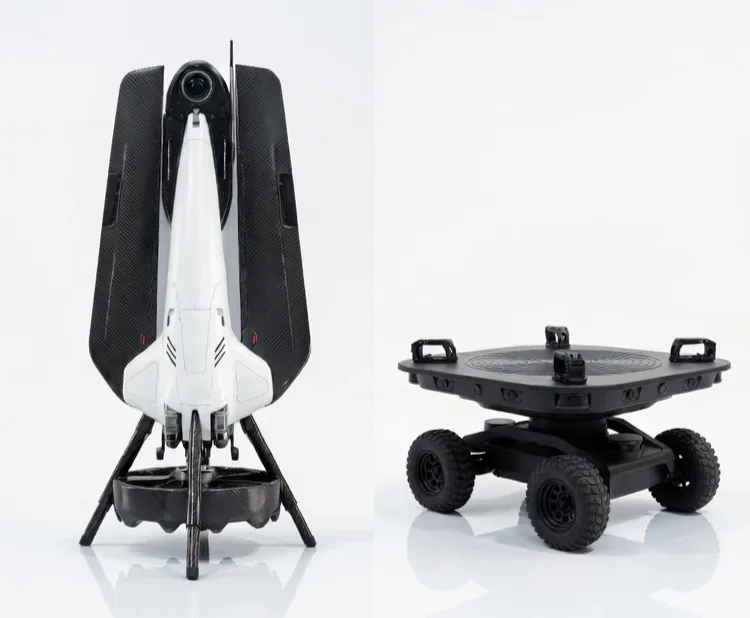
Three platforms. One stack.
Every HRT system runs the same autonomy core, operators trained on one platform are trained on all of them. Ground, air, and hybrid assets cooperate natively on the same GRYD mesh.
OKR-1
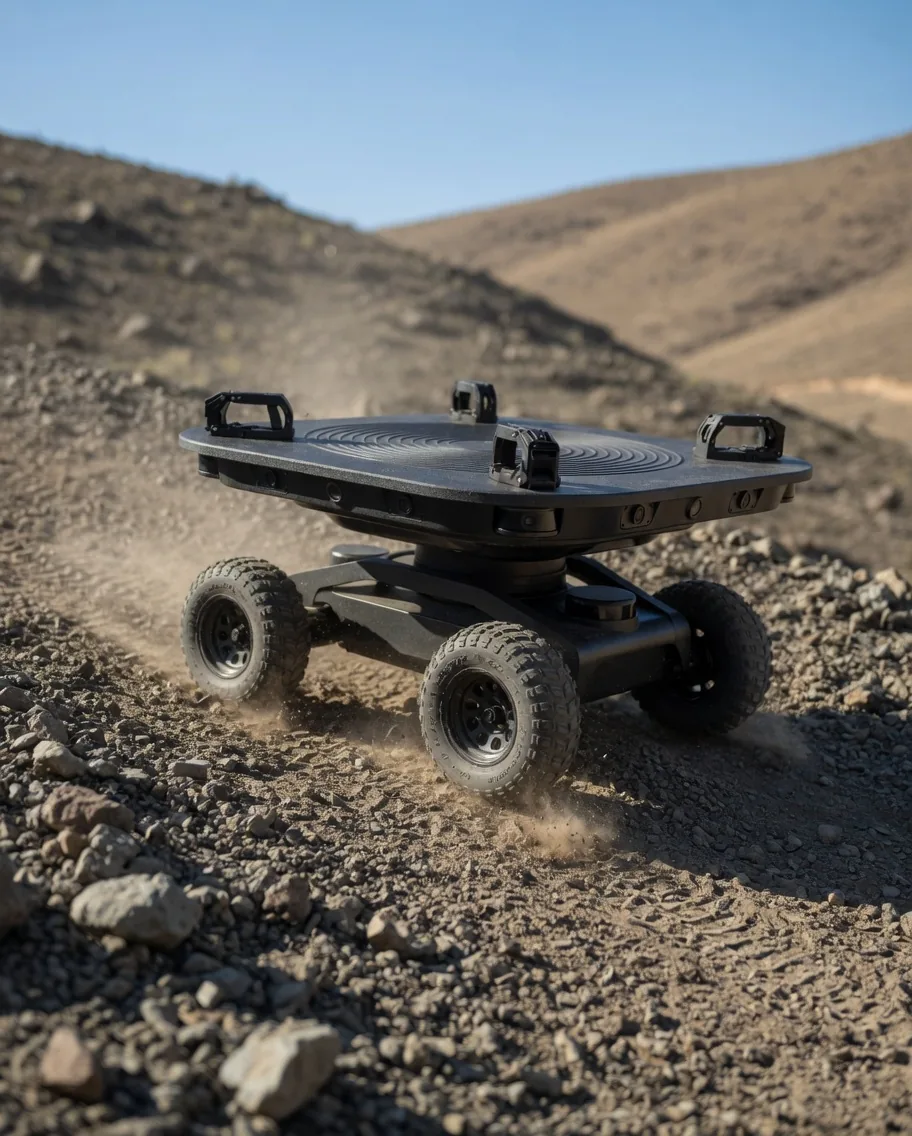
Four-wheel autonomous ground vehicle engineered for unstructured terrain. Serves as mobile sensor platform, counter-UAS node, or launch base for airborne assets.
Built for the contested edge.
Three operational capabilities, one integrated stack. Each mission profile inherits the same autonomy, the same GRYD backbone, the same operator interface.
Persistent ISR
Multi-domain reconnaissance at the tactical edge. EO/IR payloads, SIGINT modules, and synthetic aperture options, all fusing into a single operator view in real time.
Counter-UAS
Detect, classify, and neutralize hostile unmanned systems from ground and air. Kinetic and non-kinetic effectors, integrated into the GRYD command layer.
Autonomous Ops
Mission execution without continuous human control. Edge compute, swarm coordination, and contested-comms resilience. The system keeps operating when GRYD falls back to local autonomy.

The autonomy stack.
Five layers, built in-house, deployed as one. A single codebase runs across every HRT platform, updates propagate across the GRYD fleet within a single sync window.
HRT does not license autonomy from third parties. Every layer, from the motion kernel to the operator UI, is designed, written, and maintained by our own engineering team.
That vertical integration is why a software update shipped on Monday runs on every airframe and every ground vehicle in the field by Thursday.
A distributed battery architecture.
Every HRT platform runs on a Ryvid Labs battery management system, a three-tier, distributed architecture designed for scalability, reliability, and high-performance electric powertrains. Unified at the fleet level by GRYD.
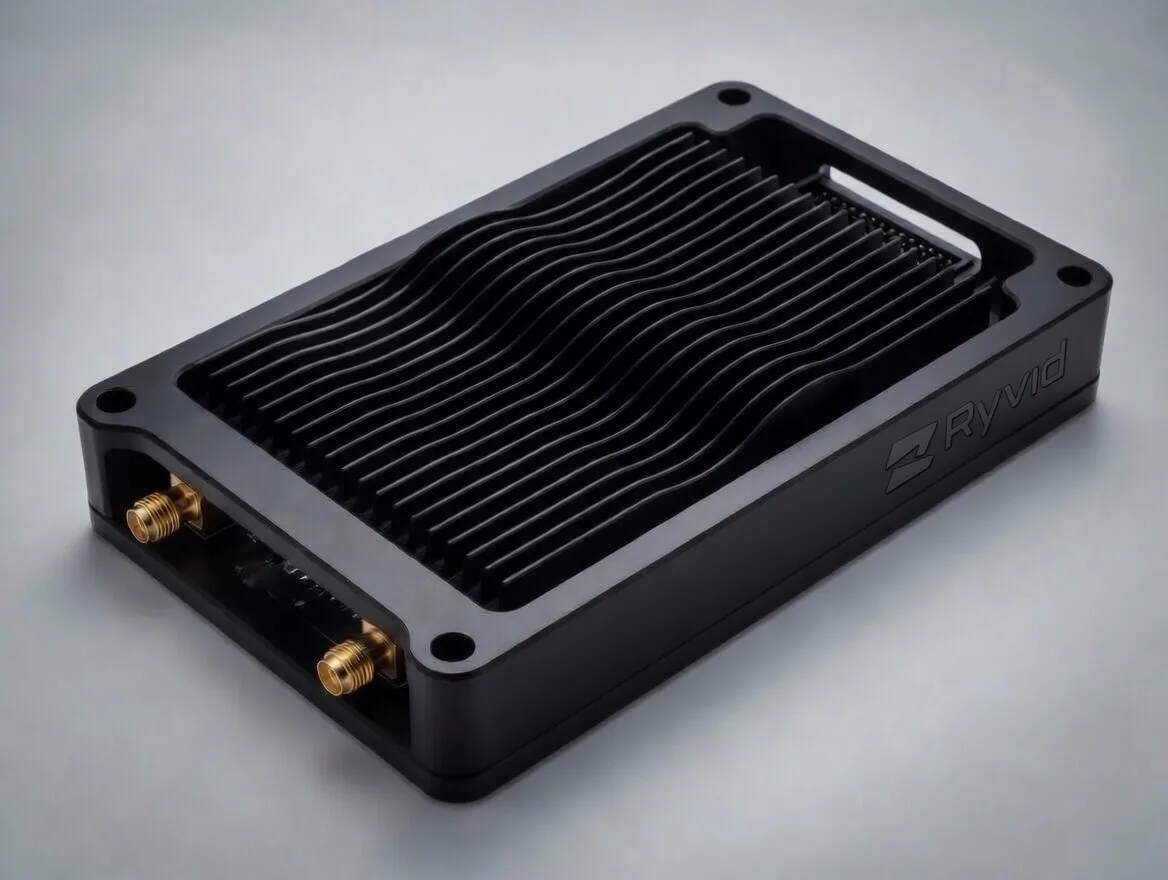
Three tiers: a Main BMS Controller for system-level intelligence, a flexible number of Battery Interface Modules processing cell-level data at the source, and a Switch Board managing the physical pack-to-load interface.
Scale from low-cell-count systems to high-voltage packs without redesigning the core architecture. Model-based firmware, developed, simulated, and verified before it ever reaches hardware.
Every BMS streams CAN telemetry to GRYD, cell-level state, thermal envelope, and duty history. Comprehensive diagnostics and real-time visibility across the fleet, feeding predictive maintenance, charge orchestration, and active vehicle control.
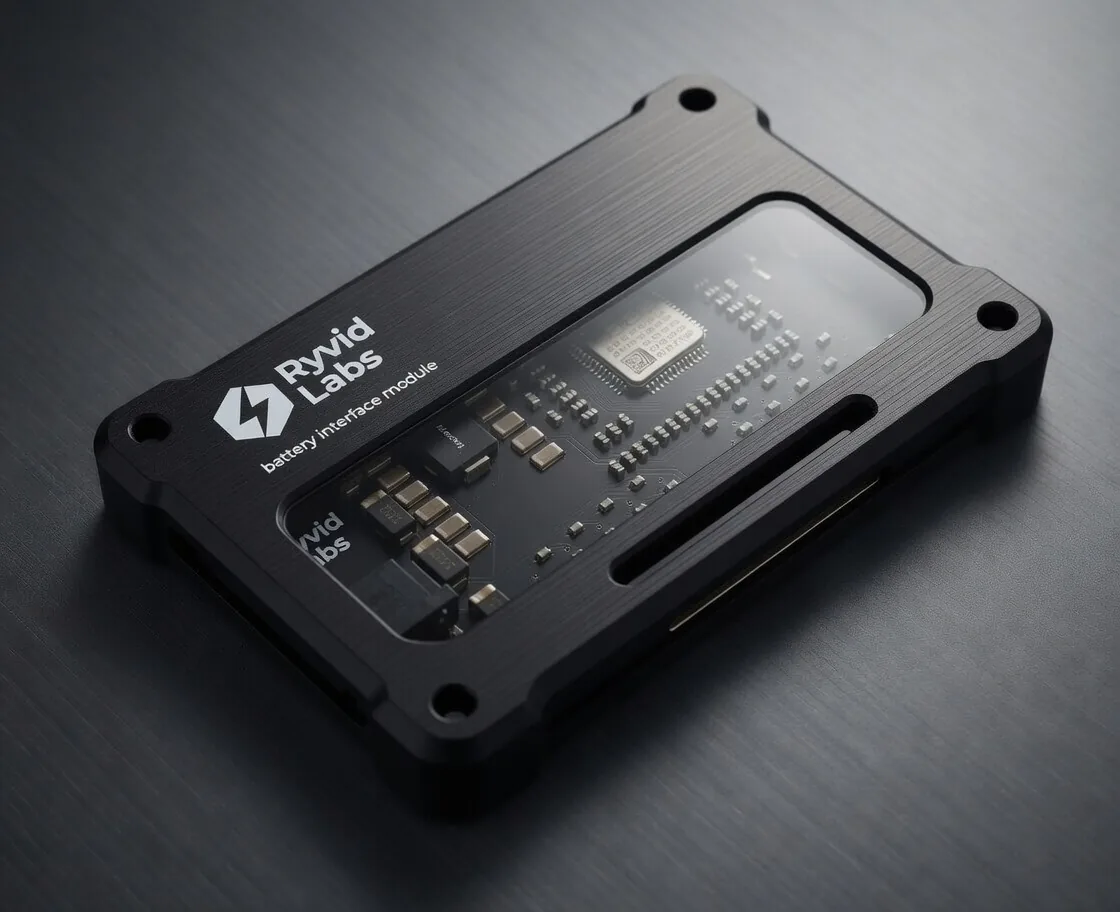
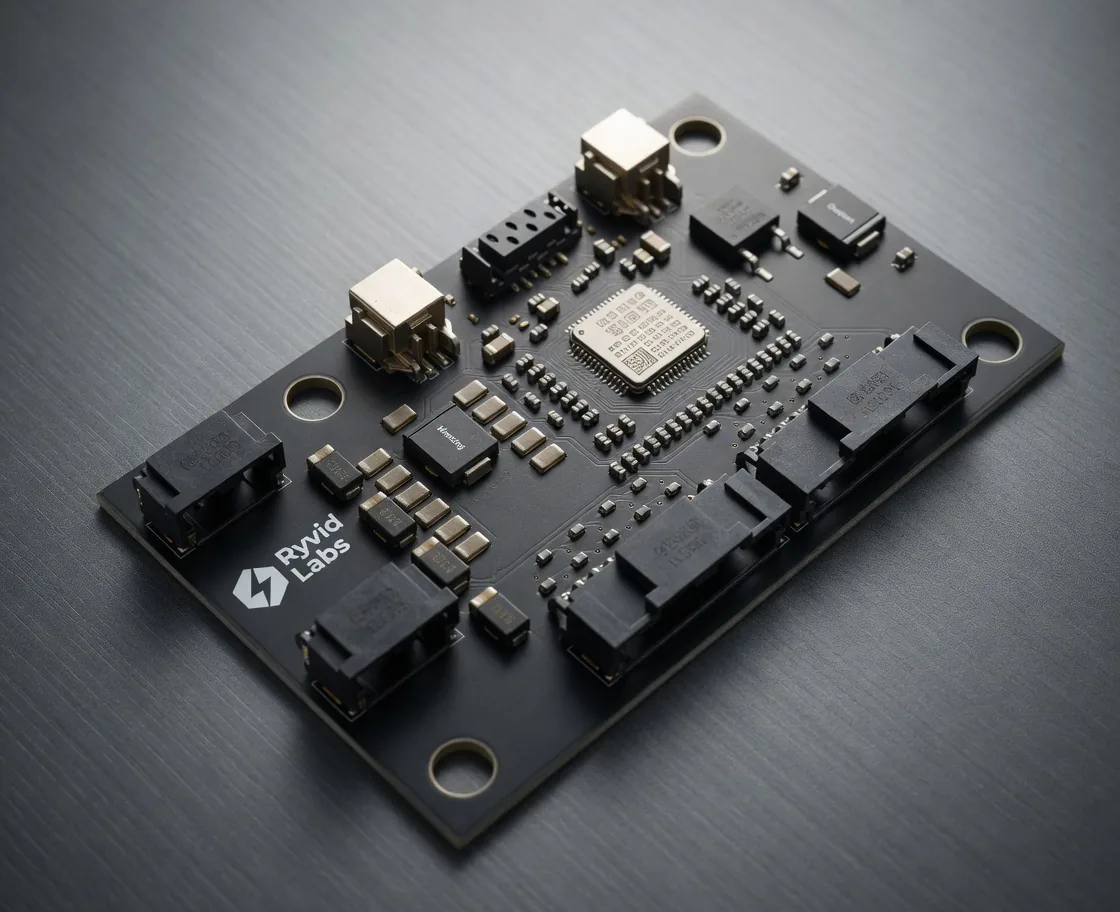
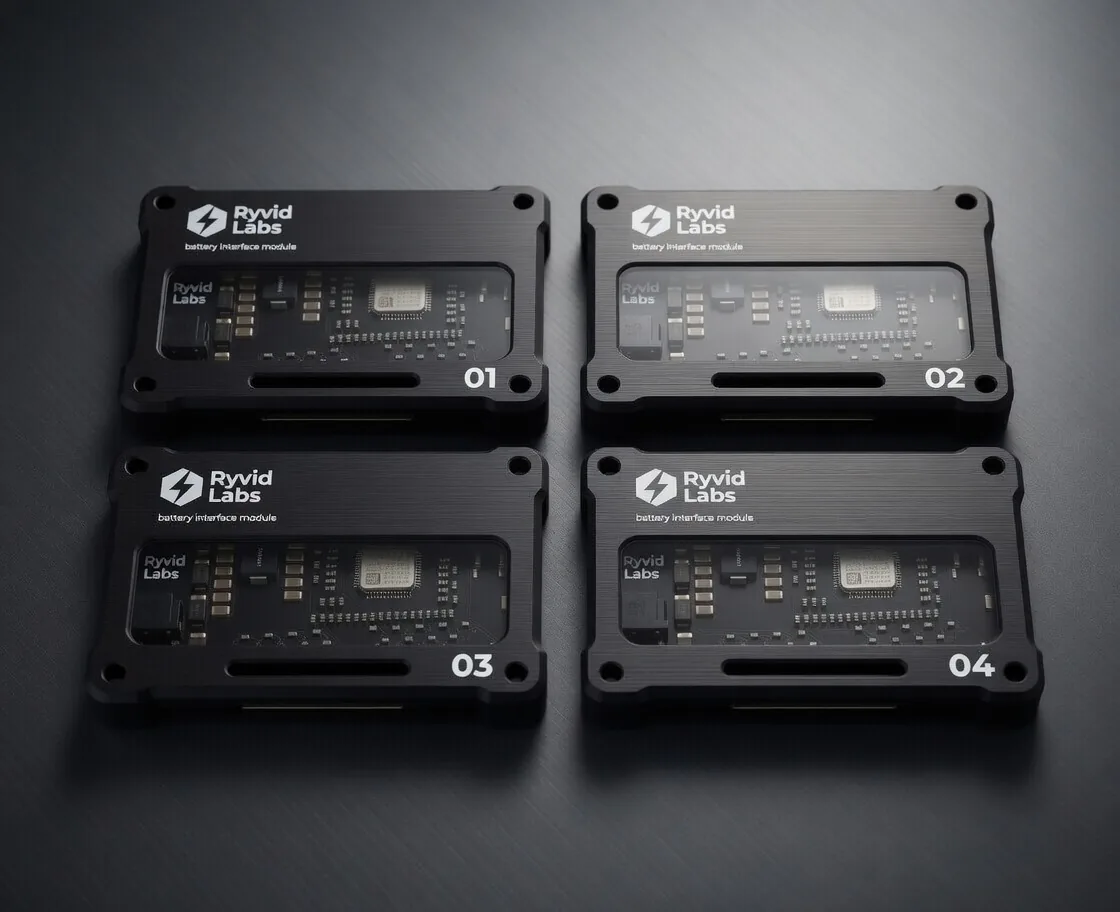
Battery Interface Module , BIM
Cell-level data processed close to the source. Reduced wiring, improved signal integrity, and one part number that scales from a 48V scout drone pack to a 400V EV.
One platform. Full-cycle mission.
A representative hybrid sortie, OKR-1 deploys to a forward position, launches a VTOL asset for persistent overwatch, and recovers it without returning to base.
Start an operational dialogue.
We work with government programs, primes, and allied partners. If that's you, tell us about the problem you're trying to solve, we'll respond within 48 hours.